DesignFlow: AI-Powered Design Delivery Management
Internal AI-powered design delivery platform with real-time project insights, predictive task management, team collaboration tools, and automated quality gates for design workflows.
WireframeShipped
DesignFlow is an internal AI-powered design delivery management platform I conceptualized, designed, and developed specifically for my team to address the growing complexity of managing multiple design projects simultaneously. As our design workload increased and client expectations evolved, I recognized the need for an intelligent system that could not only track project progress but also predict bottlenecks, optimize resource allocation, and ensure consistent delivery quality.
Managing design projects across multiple clients and stakeholders presented several critical challenges that traditional project management tools couldn't address:
 DesignFlow's AI-powered main dashboard showing project overview, team workload, and intelligent insights
The heart of DesignFlow is its AI-enhanced dashboard that provides real-time insights into team performance, project health, and delivery predictions:
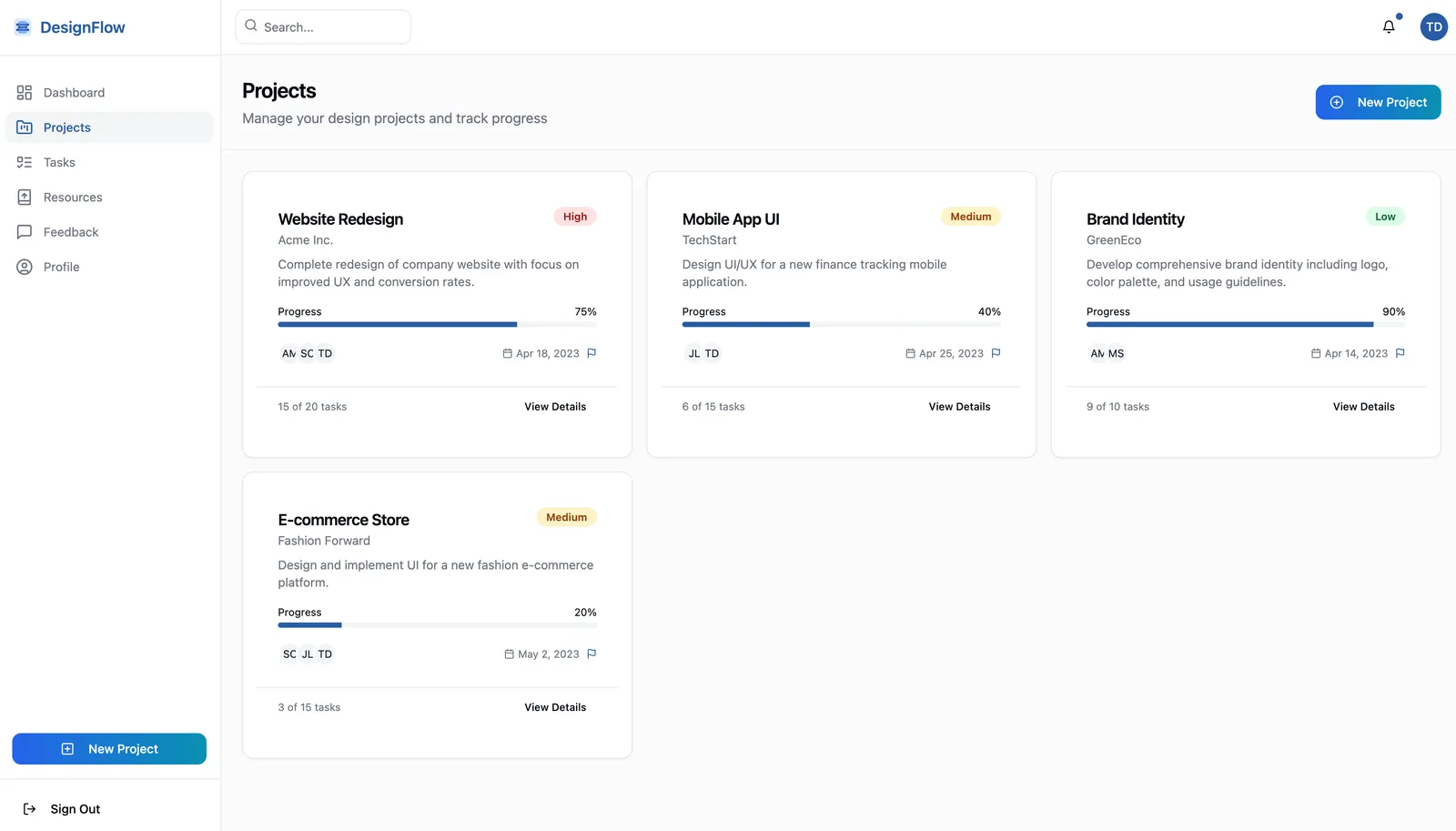
Advanced project management interface with AI-powered task prioritization and timeline optimization
DesignFlow's task management system goes beyond traditional to-do lists by incorporating design-specific intelligence:
DesignFlow's AI-powered main dashboard showing project overview, team workload, and intelligent insights
The heart of DesignFlow is its AI-enhanced dashboard that provides real-time insights into team performance, project health, and delivery predictions:
Advanced project management interface with AI-powered task prioritization and timeline optimization
DesignFlow's task management system goes beyond traditional to-do lists by incorporating design-specific intelligence:
 Collaborative workspace with AI-powered communication insights and team performance analytics
The platform enhances team collaboration through:
Collaborative workspace with AI-powered communication insights and team performance analytics
The platform enhances team collaboration through:
 Comprehensive design analytics showing project metrics, quality scores, and performance trends
DesignFlow incorporates sophisticated AI models specifically trained for design workflows:
The platform's predictive capabilities help prevent issues before they occur:
Comprehensive design analytics showing project metrics, quality scores, and performance trends
DesignFlow incorporates sophisticated AI models specifically trained for design workflows:
The platform's predictive capabilities help prevent issues before they occur:
 Client communication hub with automated feedback processing and revision tracking
 Automated reporting interface generating client updates and team performance insights
DesignFlow is built on a modern, AI-centric architecture:
Automated reporting interface generating client updates and team performance insights
DesignFlow is built on a modern, AI-centric architecture:
 Comprehensive system integration showing connections with design tools, communication platforms, and AI services
The platform seamlessly integrates with our existing workflow:
DesignFlow was built to drive measurable improvements across how a design team plans, executes, and ships work:
Building DesignFlow as an internal tool provided unique insights into AI-powered workflow optimization:
Developing DesignFlow as an internal tool allowed for rapid iteration and perfect alignment with our specific needs:
Comprehensive system integration showing connections with design tools, communication platforms, and AI services
The platform seamlessly integrates with our existing workflow:
DesignFlow was built to drive measurable improvements across how a design team plans, executes, and ships work:
Building DesignFlow as an internal tool provided unique insights into AI-powered workflow optimization:
Developing DesignFlow as an internal tool allowed for rapid iteration and perfect alignment with our specific needs:
The Internal Workflow Challenge
- Design-Specific Tracking: Generic project tools lacked understanding of design workflows, iterations, and approval cycles
- Resource Allocation: Difficulty in optimizing designer assignments based on skills, availability, and project requirements
- Quality Consistency: Ensuring design standards and brand guidelines across all projects and team members
- Client Communication: Managing feedback loops, revisions, and stakeholder expectations efficiently
- Delivery Predictability: Accurately estimating project timelines and identifying potential delays early
DesignFlow's AI-powered main dashboard showing project overview, team workload, and intelligent insights
AI-Driven Core Features
Intelligent Project Dashboard
- Smart Project Prioritization: AI algorithms analyze deadlines, client importance, and resource availability to suggest optimal project sequencing
- Predictive Analytics: Predictive analytics for project completion dates through historical project data modeling
- Resource Optimization: Intelligent assignment recommendations based on designer skills, current workload, and project requirements
- Risk Assessment: Early warning system for potential delays or quality issues
Advanced project management interface with AI-powered task prioritization and timeline optimization
AI-Enhanced Task Management
- Design Phase Recognition: AI automatically identifies project phases (research, wireframing, design, review, delivery)
- Smart Time Estimation: Machine learning algorithms learn from historical data to provide accurate time estimates
- Dependency Mapping: Intelligent identification of task dependencies and critical path optimization
- Quality Gates: Automated checkpoints ensuring design standards and brand compliance
Intelligent Team Collaboration
Collaborative workspace with AI-powered communication insights and team performance analytics
The platform enhances team collaboration through:
- Smart Notifications: AI-filtered alerts that prioritize urgent communications while reducing noise
- Skill-Based Assignments: Automatic matching of tasks to team members based on expertise and availability
- Collaboration Insights: Analytics on team communication patterns and collaboration effectiveness
- Knowledge Sharing: AI-curated design pattern library and best practice recommendations
Advanced AI Capabilities
Design Intelligence Engine
Comprehensive design analytics showing project metrics, quality scores, and performance trends
DesignFlow incorporates sophisticated AI models specifically trained for design workflows:
- Design Quality Scoring: Computer vision algorithms assess design consistency and brand adherence
- Trend Analysis: AI identifies emerging design patterns and suggests contemporary approaches
- Client Preference Learning: Machine learning models learn client preferences to predict approval likelihood
- Automated Quality Assurance: AI-powered checks for common design issues and brand guideline violations
Predictive Project Management
- Bottleneck Prediction: AI identifies potential workflow bottlenecks 2-3 days in advance
- Resource Demand Forecasting: Predictive models suggest optimal team scaling and resource allocation
- Client Satisfaction Modeling: Algorithms predict client satisfaction based on project metrics and communication patterns
- Delivery Risk Assessment: Real-time risk scoring for project delivery success
Client Communication & Feedback Management
Client communication hub with automated feedback processing and revision tracking
Intelligent Feedback Processing
- Feedback Categorization: AI automatically categorizes client feedback by priority, complexity, and design area
- Revision Impact Analysis: Machine learning models predict the time and resource impact of requested changes
- Communication Optimization: AI suggests optimal communication timing and methods based on client preferences
- Approval Prediction: Algorithms assess the likelihood of design approval based on historical patterns
Automated Reporting
Automated reporting interface generating client updates and team performance insights
- Smart Report Generation: AI creates customized progress reports for different stakeholder types
- Visual Progress Tracking: Automated generation of visual project timelines and milestone updates
- Performance Insights: Intelligent analysis of team productivity and project success metrics
- Client Satisfaction Monitoring: Continuous tracking and analysis of client engagement and satisfaction
Technical Innovation & Architecture
AI-First Architecture
- Machine Learning Pipeline: Continuous learning from project data to improve predictions and recommendations
- Natural Language Processing: Understanding and processing client feedback and team communications
- Computer Vision Integration: Automated design analysis and quality assessment
- Real-time Analytics: Live processing of project data for immediate insights and alerts
Integration Ecosystem
Comprehensive system integration showing connections with design tools, communication platforms, and AI services
The platform seamlessly integrates with our existing workflow:
- Figma API Integration: Direct connection to design files for automated progress tracking
- Communication Tools: Integration with Slack, email, and video conferencing platforms
- Time Tracking: Automated time logging based on design tool usage and project activities
- File Management: Intelligent organization and version control of design assets
What It Delivers
Team Productivity:
- Reduced project management overhead through automation
- Better on-time delivery via clearer planning and tracking
- Faster project setup and resource allocation
- Fewer manual administrative tasks
Quality & Consistency:
- Stronger adherence to brand guidelines across projects
- Fewer revision cycles through predictive quality checks
- More consistent design output across team members
- Higher first-approval rates
Client Satisfaction:
- Faster client communication and response times
- More reliable delivery-date predictions
- Improved client satisfaction
- Less scope creep through better planning
Lessons Learned & Continuous Evolution
- Domain Expertise is Crucial: AI models perform best when trained on design-specific data and workflows
- User Adoption Requires Intuitive Design: Even powerful AI features fail without user-friendly interfaces
- Continuous Learning is Essential: The system improves daily by learning from our team's actual work patterns
- Integration Depth Matters: Shallow integrations provide limited value; deep workflow integration transforms productivity
Future Enhancements:
- Advanced Design Generation: AI-assisted design creation based on briefs and brand guidelines
- Predictive Client Needs: Anticipating client requirements before they're expressed
- Automated Quality Assurance: Real-time design validation against brand standards
- Cross-Project Learning: AI insights that improve future projects based on historical success patterns
The Internal Tool Advantage
- Custom Workflows: Tailored specifically to our team's unique processes and client requirements
- Rapid Iteration: Direct feedback loop enables immediate improvements and feature additions
- Data Privacy: Complete control over sensitive client and project data
- Competitive Advantage: Proprietary insights and optimizations that external tools can't provide