Nine Years in the Seams
A reflection on a career spent at the intersections — between design and engineering, product and AI, MENA and global. What I've learned about where value is created, and why the seams are where I've chosen to stay.
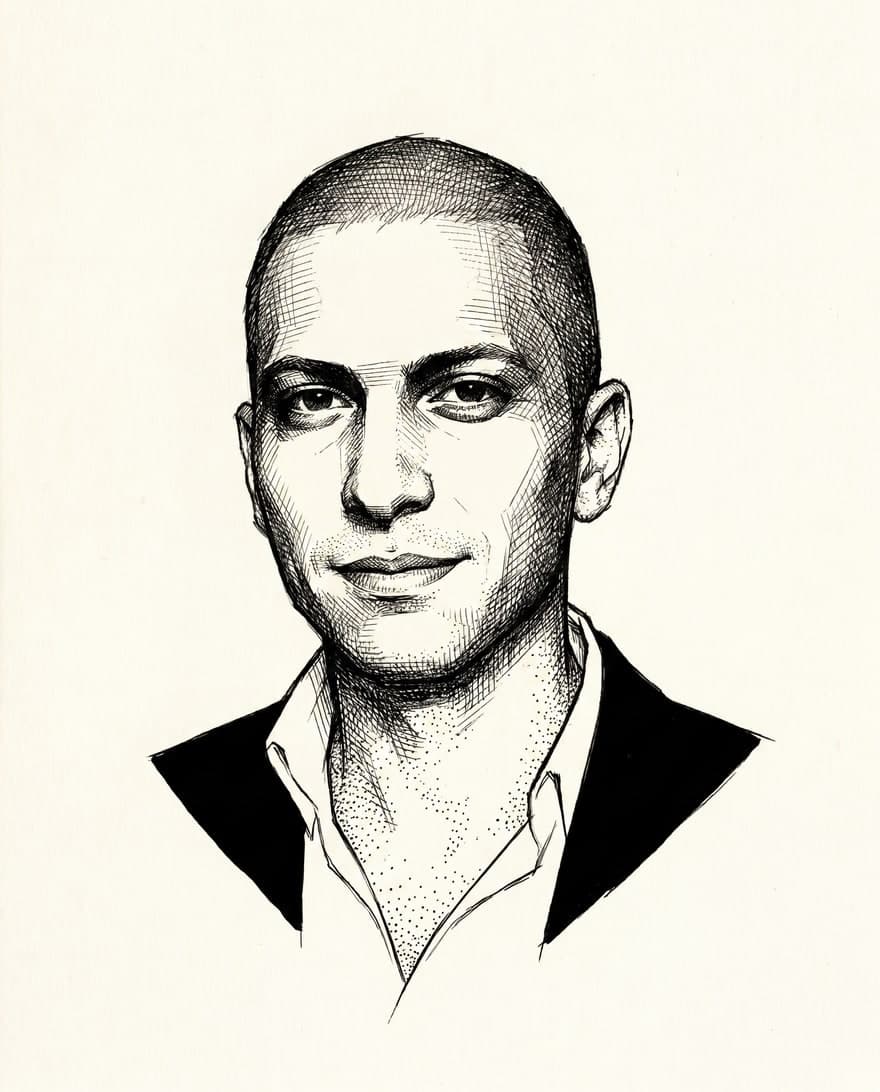
Nine years ago, I started as a digital designer at a small agency in Egypt. Today I run a live AI SaaS solo and lead product for a B2B platform transformation. The career path between those two points doesn't follow a straight line, and the thing that connects them — the thing that has defined every role, every project, every decision — is a stubborn refusal to stay in one lane.
I call it holding the seam. Let me explain what I mean.
Every organization has seams. The space between design and engineering. Between product and the business. Between the roadmap and the reality of what users need. Between the AI feature that sounded great in a meeting and the production system that has to actually work.
Things fall through these gaps constantly. A beautiful design ships as a broken implementation. A product spec gets lost in translation to engineering. An AI demo impresses stakeholders and then fails on real data. The seam is where intention meets reality, and it's where most products quietly die.
My career has been a slow realization that the seam is where I'm most useful. Not because I'm the best designer or the best engineer or the best product manager — I'm not any of those things in isolation. But I can operate across all of them, and that means I can hold the seam. I can make sure the design intent survives implementation, that the product vision survives engineering constraints, that the AI demo survives production.
Looking back, each role taught me a different seam.
The early years (2011–2016): Design agencies, enterprise clients, remote work with distributed teams. I learned the seam between design and engineering — how Figma files become (or fail to become) shipped products. I learned that the handoff is where quality dies, and that the person who can operate on both sides of the handoff is worth more than two specialists who can't communicate.
ARTime (2017–2024): Seven years building a platform that grew to 100,000+ monthly active users across MENA. I learned the seam between product management and engineering — how roadmaps become (or fail to become) shipped features. I learned that the recommendation engine generating $47K a month wasn't valuable because of the algorithm; it was valuable because the algorithm, the product placement, the business metric, and the measurement methodology were all held together coherently. One person understanding the full chain was what made it work.
Menyo Pro (2024–present): Building a SaaS solo. I learned the seam between all of it — product, UX, AI, engineering, operations, support. When you're solo, there are no handoffs. There's no one to blame, no one to wait for, no one to translate between. You hold every seam yourself. It's the hardest thing I've done, and the most clarifying.
Group Solutions (2025–present): Leading a platform transformation. I'm back in a seam I know well — the space between legacy systems and modern architecture, between stakeholder expectations and engineering reality. The difference now is that I bring nine years of holding seams to a problem that most teams approach with a single-discipline perspective.
Here's the thing I understand now that I didn't nine years ago: value is created at the seams, not within disciplines.
The recommendation engine at ARTime — the $47K/month one — wasn't a machine learning achievement. It was a seam achievement. The ML was straightforward (collaborative filtering, scikit-learn, cosine similarity — nothing exotic). The value came from connecting the ML to the product UI (where to place recommendations), the business metric (AOV, not CTR), the measurement methodology (holdout groups, not vanity metrics), and the operational reality (MENA e-commerce, multi-currency, Arabic support).
Any one of those pieces, done well, would have produced a fraction of the value. The value was in holding them together. That's seam work.
Menyo Pro is the same pattern. The menu scanner isn't impressive because of the LLM extraction — lots of products have that. It's impressive because the extraction, the validation layer, the human-in-the-loop fallback, the multi-tenant architecture, the RTL support, the offline-first order system, and the pricing model all cohere into something a restaurant owner can actually use. Each piece is held by the same mind. The seams are tight.
AI has made the within-discipline work easier. Writing code, generating designs, drafting copy — these tasks are compressed. But the seams haven't gotten easier. If anything, they're harder, because the speed of within-discipline execution has increased the volume of work crossing the seams.
When engineering can ship in hours instead of days, more features cross into product faster. More design decisions need to be made. More AI features need to be validated against real user behavior. The seam doesn't compress — it gets wider, because more flows through it.
This is why I'm optimistic about my career trajectory. The skills that are getting cheaper (execution within a discipline) are not the skills I've spent nine years developing (holding the seams between disciplines). If anything, the demand for seam-holders is increasing, because the supply of within-discipline execution is exploding.
After nine years, I've distilled my approach to a single principle: the person who understands the whole chain holds the quality.
A designer who doesn't understand implementation can't prevent design degradation. An engineer who doesn't understand the user can't prevent feature misuse. A PM who doesn't understand the technology can't prevent scope delusion. A data scientist who doesn't understand the business can't prevent metric vanity.
But someone who understands all of it — who can design, build, ship, measure, and iterate — holds the quality of the entire chain. They catch the degradation at every junction. They keep the intent intact from idea to production.
That's what I do. That's the seam. And after nine years, I'm certain it's where I belong.
I don't know what the next nine years look like. I know they'll involve AI, because that's where the interesting seams are forming — between LLM capabilities and production reality, between agent autonomy and business safety, between what AI can do and what users actually need.
I know they'll involve building, because building is how I understand things. I can't think about a problem abstractly for long; I need to build a version of it, break it, fix it, and see what the experience teaches me.
And I know they'll involve the MENA region, because that's where I understand the market. Nine years of sitting in restaurants, talking to owners, watching how technology fits (and doesn't fit) into real operations — that knowledge is a seam between global technology and local reality. It's valuable, and it's mine.
Products die in the seam. I hold it. That's been true for nine years, and I don't expect it to change.
If this resonates, I'm always up for talking about seams, AI products, and building across disciplines. Find me on Twitter or GitHub.
The Seam, Defined
The Arc
What I've Learned About Value
Why the Seams Are Harder Now
The Principle I Build By
What's Next
If this resonates, I'm always up for talking about seams, AI products, and building across disciplines. Find me on Twitter or GitHub.